

The first step in refining your investment strategy is to conduct a thorough assessment of your current portfolio. This involves taking a close look at the assets you hold, their performance over time, and how they align with your overall financial goals. Begin by categorizing your investments into different asset classes, such as stocks, bonds, real estate, and cash equivalents.
This categorization will help you understand the distribution of your investments and whether you are overly concentrated in one area or adequately diversified across various sectors. Once you have a clear picture of your asset allocation, analyze the performance of each investment. Look at historical returns, volatility, and how each asset has reacted to market fluctuations.

For instance, if you have a significant portion of your portfolio in technology stocks, consider how they performed during market downturns compared to more stable sectors like utilities or consumer staples. This analysis will not only highlight which investments are performing well but also reveal those that may be dragging down your overall returns. Understanding these dynamics is crucial for making informed decisions about future investments.
Key Takeaways
- Regularly evaluate your portfolio to understand its current performance.
- Identify and address stocks that are underperforming to minimize losses.
- Research new investment options to enhance portfolio growth.
- Diversify your investments to reduce risk and improve stability.
- Set clear goals and adjust your portfolio accordingly, seeking professional advice when needed.
Identifying Underperforming Stocks

Identifying underperforming stocks is a critical component of portfolio management. Underperformance can be defined in various ways, such as stocks that have consistently lagged behind their benchmarks or those that have failed to meet your expectations based on their historical performance. To pinpoint these laggards, start by comparing each stock’s performance against relevant indices or sector averages.
For example, if you own shares in a retail company, compare its performance to the S&P Retail Select Industry Index to gauge its relative strength. In addition to quantitative analysis, qualitative factors should also be considered. Investigate the reasons behind a stock’s underperformance.
Is it due to broader market trends, such as economic downturns or shifts in consumer behavior? Or is it specific to the company, such as management issues, declining sales, or increased competition? For instance, if a once-prominent tech company is struggling due to a failure to innovate or adapt to changing market conditions, it may be time to reevaluate its place in your portfolio.
By understanding the underlying causes of underperformance, you can make more informed decisions about whether to hold, sell, or even buy more shares of these stocks.
Researching New Investment Opportunities

Once you have assessed your current holdings and identified underperforming assets, the next step is to research new investment opportunities that align with your financial goals and risk tolerance. This process begins with identifying sectors or industries that show promise for growth. For example, renewable energy has gained significant traction in recent years due to increasing environmental awareness and government incentives.
By focusing on sectors poised for expansion, you can position your portfolio for potential gains. In addition to sector analysis, individual stock research is essential. Look for companies with strong fundamentals, such as robust earnings growth, low debt levels, and competitive advantages within their industry.
Utilize financial metrics like price-to-earnings ratios, return on equity, and profit margins to evaluate potential investments. Furthermore, consider the company’s management team and their track record in navigating challenges and seizing opportunities. For instance, a company that has consistently innovated and adapted its business model in response to market changes may be a more attractive investment than one that has remained stagnant.
Diversifying Your Portfolio
Diversification is a fundamental principle of investing that helps mitigate risk while enhancing potential returns. By spreading your investments across various asset classes, sectors, and geographic regions, you can reduce the impact of any single investment’s poor performance on your overall portfolio. A well-diversified portfolio might include a mix of domestic and international stocks, bonds of varying maturities and credit qualities, and alternative investments such as real estate or commodities.
When diversifying, consider not only the types of assets but also their correlation with one another. For example, stocks and bonds often behave differently under various economic conditions; when stocks are performing poorly, bonds may provide stability and income. Additionally, within the stock portion of your portfolio, aim for diversification across sectors—such as technology, healthcare, and consumer goods—to further reduce risk.
This approach ensures that if one sector experiences a downturn, others may still perform well, providing a buffer against losses.
Setting Clear Investment Goals
| Metric | Value | Date |
|---|---|---|
| Stock Symbol | TTWO | 2024-06-01 |
| Current Price | 95.30 | 2024-06-01 |
| Market Cap | 20.5 Billion | 2024-06-01 |
| PE Ratio | 28.4 | 2024-06-01 |
| Dividend Yield | 0.5% | 2024-06-01 |
| 52 Week High | 105.75 | 2024-06-01 |
| 52 Week Low | 75.20 | 2024-06-01 |
| Average Volume | 3.2 Million | 2024-06-01 |
Establishing clear investment goals is essential for guiding your investment strategy and decision-making process. These goals should be specific, measurable, achievable, relevant, and time-bound (SMART). For instance, you might set a goal to achieve a 7% annual return over the next five years to fund your child’s education or save for retirement.
By defining your objectives clearly, you can tailor your investment choices to align with these targets. Moreover, consider both short-term and long-term goals when formulating your investment strategy. Short-term goals may include saving for a vacation or purchasing a new car within the next few years, while long-term goals could involve building a retirement nest egg or accumulating wealth for future generations.
Each type of goal may require different investment approaches; for example, short-term goals might necessitate more conservative investments with lower volatility, while long-term goals could allow for greater risk-taking in pursuit of higher returns.
Rebalancing Your Portfolio
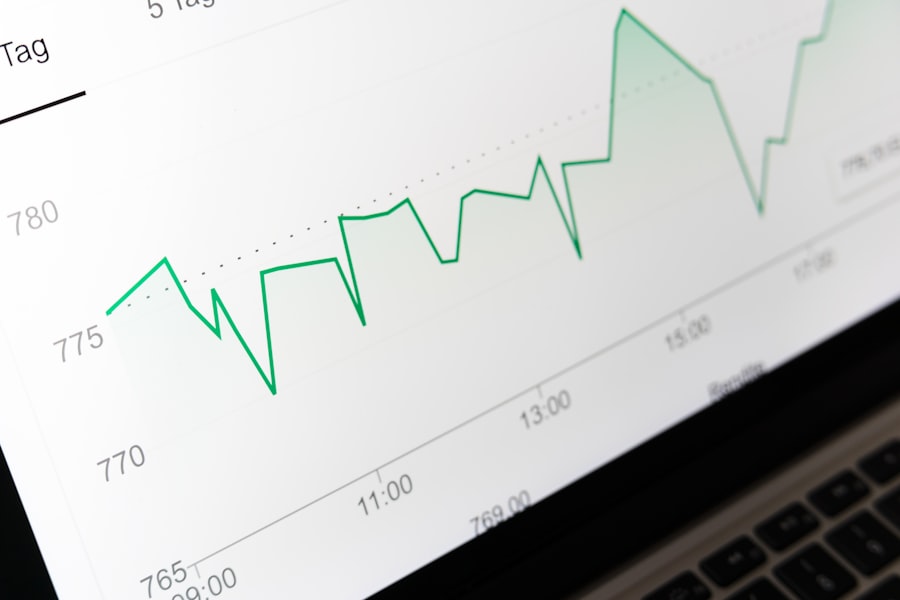
Rebalancing is the process of realigning the proportions of assets in your portfolio to maintain your desired level of risk and return. Over time, certain investments may outperform others, leading to an unintended shift in your asset allocation. For instance, if technology stocks surge while bonds lag behind, you may find that your portfolio has become overly weighted toward equities.
This imbalance can increase risk exposure beyond your comfort level. To effectively rebalance your portfolio, establish a regular schedule—such as annually or semi-annually—to review your asset allocation. During this review, assess whether any adjustments are necessary to bring your portfolio back in line with your original investment strategy.
This may involve selling some of the outperforming assets and reallocating those funds into underperforming areas or new opportunities that align with your goals. While rebalancing may seem counterintuitive—selling high-performing assets can feel like giving up potential gains—it is essential for maintaining a disciplined investment approach.
Monitoring and Adjusting Your Investments
Continuous monitoring of your investments is vital for ensuring that they remain aligned with your financial goals and market conditions. Regularly reviewing your portfolio allows you to identify trends and make timely adjustments as needed. Set aside time each month or quarter to evaluate the performance of your holdings and assess whether they continue to meet your expectations.
In addition to performance monitoring, stay informed about broader market trends and economic indicators that could impact your investments. For example, changes in interest rates can significantly affect bond prices and stock valuations. If you notice signs of an economic slowdown or shifts in consumer behavior that could impact specific sectors negatively, it may be prudent to adjust your holdings accordingly.
This proactive approach enables you to respond swiftly to changing market conditions rather than waiting until it’s too late.
Seeking Professional Advice
While self-directed investing can be rewarding, there are times when seeking professional advice can provide valuable insights and guidance. Financial advisors bring expertise in market analysis, asset allocation strategies, and tax implications that can enhance your investment decisions. They can help you navigate complex financial landscapes and tailor an investment strategy that aligns with your unique circumstances.
When considering professional advice, look for advisors who are fiduciaries—meaning they are legally obligated to act in your best interest. Additionally, assess their qualifications and experience in managing portfolios similar to yours. A good advisor will take the time to understand your financial goals and risk tolerance before recommending specific investment strategies or products.
By leveraging their expertise, you can gain confidence in your investment decisions and potentially achieve better outcomes over time.

