

Delta Air Lines, represented by the ticker symbol DAL, has been a significant player in the aviation industry for decades. Its stock performance is often a reflection of broader economic conditions, particularly during periods of market turbulence. Investors closely monitor DAL stock as it tends to be sensitive to various external factors, including fuel prices, consumer demand, and geopolitical events.
During times of market volatility, DAL’s stock can experience sharp fluctuations, influenced by both macroeconomic indicators and company-specific news. For instance, during the onset of the COVID-19 pandemic in early 2020, DAL stock plummeted as travel restrictions were implemented globally. The airline industry was one of the hardest hit sectors, with Delta reporting unprecedented losses.

However, as vaccination rates increased and travel demand began to rebound, DAL stock showed signs of recovery. This volatility illustrates how external shocks can lead to rapid changes in stock performance, making it essential for investors to understand the underlying dynamics that drive DAL’s market behavior.
Key Takeaways
- DAL stock performance is significantly influenced by overall market turbulence and economic conditions.
- Key factors affecting DAL stock during volatility include fuel prices, travel demand, and regulatory changes.
- Investors are advised to adopt diversified strategies and monitor market signals when dealing with DAL stock in uncertain times.
- Analysts provide mixed recommendations, emphasizing caution but recognizing potential recovery opportunities for DAL stock.
- Historical data shows DAL stock tends to experience sharp fluctuations but can outperform competitors during market rebounds.
Factors Impacting DAL Stock Amid Market Volatility

Several factors contribute to the fluctuations in DAL stock during turbulent market conditions. One of the most significant is fuel prices, which account for a substantial portion of an airline’s operating costs. When crude oil prices rise, airlines like Delta face increased expenses, which can erode profit margins and lead to lower stock prices.
Conversely, when fuel prices decline, it can provide a boost to profitability and investor confidence. Another critical factor is consumer demand for air travel. Economic indicators such as employment rates, disposable income levels, and consumer confidence directly influence travel behavior.
During economic downturns or periods of uncertainty, consumers may opt to postpone travel plans, leading to decreased revenue for airlines. For example, during the financial crisis of 2008-2009, Delta experienced a significant drop in passenger traffic, which adversely affected its stock performance. Understanding these dynamics is crucial for investors looking to navigate DAL stock during volatile periods.
Strategies for Investors to Navigate DAL Stock in Turbulent Markets

Investors seeking to navigate DAL stock amid market turbulence should consider several strategies to mitigate risk and capitalize on potential opportunities. One approach is to adopt a long-term investment perspective. While short-term fluctuations can be unsettling, focusing on Delta’s fundamentals—such as its operational efficiency, market position, and growth prospects—can provide a clearer picture of its long-term value.
Investors who maintain a long-term outlook may be better positioned to weather temporary downturns. Another strategy involves diversification within the airline sector and beyond. By spreading investments across multiple airlines or sectors that are less correlated with the aviation industry, investors can reduce their overall risk exposure.
For instance, pairing investments in DAL with stocks from industries that tend to perform well during economic downturns—such as utilities or consumer staples—can help balance a portfolio. Additionally, utilizing options strategies like protective puts can provide a safety net against significant declines in DAL stock.
Analyst Recommendations for DAL Stock in Uncertain Market Conditions
Analysts play a crucial role in shaping investor sentiment regarding DAL stock, especially during uncertain market conditions. Their recommendations often reflect a combination of quantitative analysis and qualitative assessments of the airline’s operational performance and market environment. In turbulent times, analysts may issue ratings ranging from “buy” to “sell,” based on their outlook for Delta’s financial health and market position.
For example, during periods of heightened uncertainty—such as geopolitical tensions or economic slowdowns—analysts may adopt a more cautious stance on DAL stock. They might highlight potential risks such as rising fuel costs or declining passenger demand while also pointing out Delta’s strengths, such as its strong brand loyalty and operational efficiency. Investors should pay close attention to these recommendations and consider them alongside their own research when making investment decisions.
Historical Trends of DAL Stock During Market Turbulence
| Dal Type | Current Stock (tons) | Average Price per Kg | Monthly Consumption (tons) | Stock Status |
|---|---|---|---|---|
| Toor Dal | 1200 | 1.20 | 300 | Stable |
| Moong Dal | 900 | 1.10 | 250 | Moderate |
| Urad Dal | 700 | 1.30 | 200 | Low |
| Chana Dal | 1100 | 1.15 | 280 | Stable |
| Masoor Dal | 800 | 1.25 | 220 | Moderate |
Examining historical trends of DAL stock during past periods of market turbulence can provide valuable insights for investors. For instance, during the 9/11 attacks in 2001, the airline industry faced an immediate and severe downturn as travel demand plummeted due to safety concerns. Delta’s stock fell sharply in the aftermath but eventually recovered as the industry adapted to new security measures and consumer confidence returned.
Similarly, during the Great Recession of 2008-2009, DAL stock experienced significant volatility as economic conditions deteriorated. The airline implemented cost-cutting measures and capacity reductions to navigate the challenging environment. Historical data shows that while DAL stock faced steep declines during these crises, it also demonstrated resilience in the recovery phases that followed.
Analyzing these patterns can help investors anticipate potential outcomes during future market turbulence.
Comparing DAL Stock Performance to Competitors in Volatile Markets
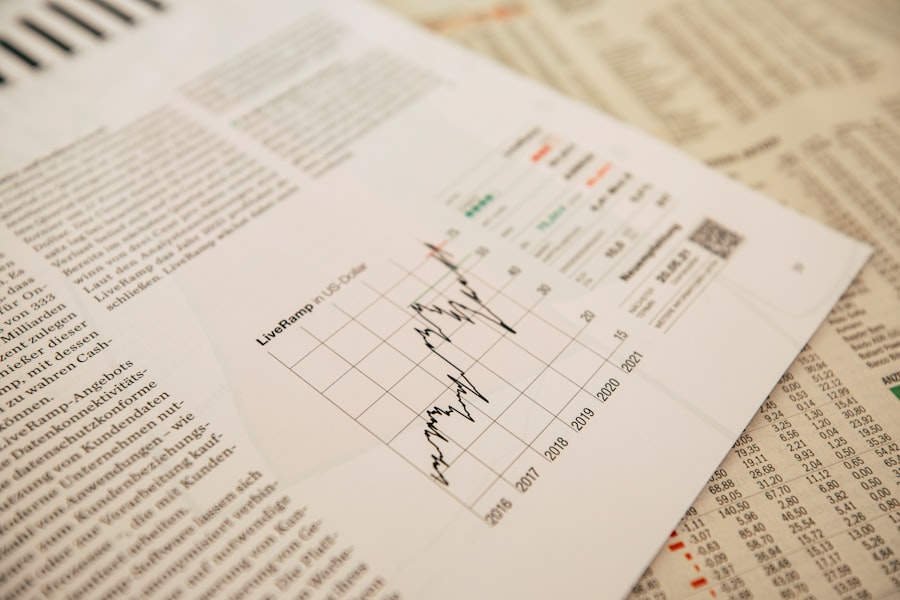
To gain a comprehensive understanding of DAL’s performance during turbulent markets, it is essential to compare it with its competitors in the airline industry. Airlines such as American Airlines (AAL) and United Airlines (UAL) often experience similar market pressures; however, their responses and recovery trajectories can differ significantly. For instance, during the COVID-19 pandemic, Delta was noted for its proactive measures in maintaining liquidity and managing operational costs compared to some of its peers.
In volatile markets, comparing key performance indicators such as revenue per available seat mile (RASM), load factor, and operating margins can provide insights into how well Delta is positioned relative to its competitors. For example, if Delta consistently maintains higher load factors than American Airlines during a downturn, it may indicate stronger brand loyalty or more effective pricing strategies. Such comparisons can inform investment decisions by highlighting which airlines are better equipped to weather economic storms.
Long-Term Outlook for DAL Stock Amidst Market Turbulence
The long-term outlook for DAL stock amidst ongoing market turbulence is shaped by several factors that extend beyond immediate economic conditions. Delta’s strategic initiatives—such as fleet modernization, sustainability efforts, and expansion into international markets—play a crucial role in determining its future performance. The airline has made significant investments in fuel-efficient aircraft and technology enhancements aimed at improving operational efficiency and reducing environmental impact.
Moreover, as global travel demand continues to recover post-pandemic, Delta’s ability to adapt to changing consumer preferences will be vital for its long-term success. The airline’s focus on enhancing customer experience through improved services and loyalty programs positions it favorably in a competitive landscape. While short-term volatility may persist due to external factors such as geopolitical tensions or economic fluctuations, Delta’s strong fundamentals suggest a positive long-term trajectory for its stock.
Expert Insights on DAL Stock and Market Turbulence
Expert insights into DAL stock during periods of market turbulence often emphasize the importance of understanding both macroeconomic trends and company-specific developments. Industry analysts frequently highlight that while external factors can create short-term volatility, Delta’s robust business model and strategic initiatives provide a solid foundation for resilience. Experts recommend that investors remain vigilant about monitoring key indicators such as fuel prices and consumer sentiment while also considering Delta’s operational metrics.
Furthermore, experts often advise investors to stay informed about regulatory changes that could impact the airline industry. For instance, shifts in government policies regarding air travel or environmental regulations can have significant implications for Delta’s operations and profitability. By staying attuned to these developments and leveraging expert analyses, investors can make more informed decisions regarding their positions in DAL stock amid turbulent market conditions.

