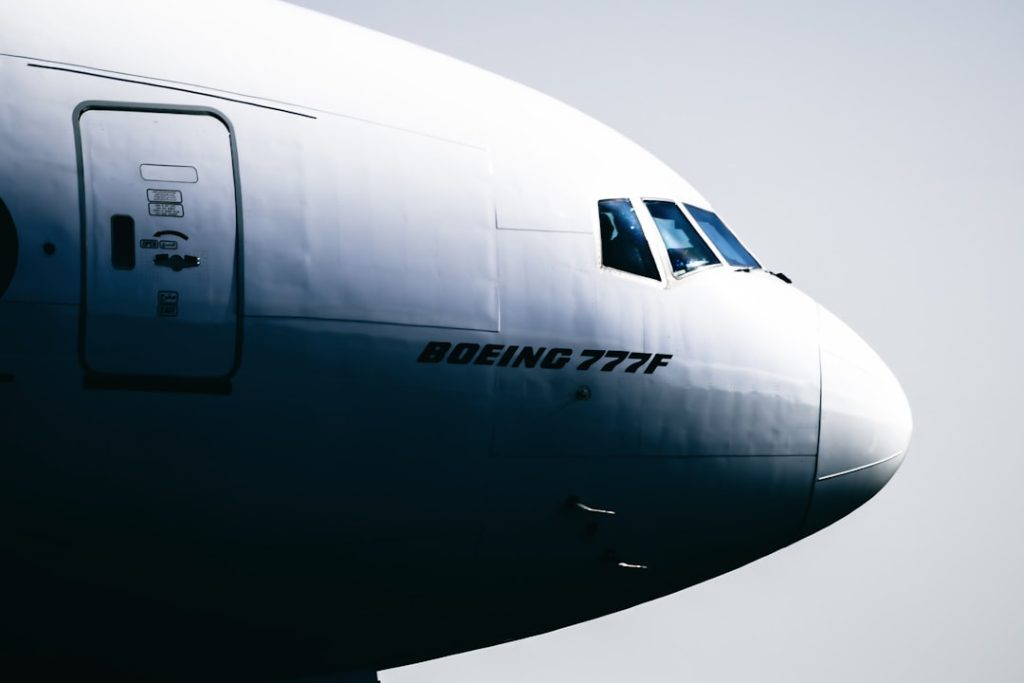
The COVID-19 pandemic has had a profound and multifaceted impact on the aviation industry, with Boeing being one of the most affected companies. As global travel restrictions were implemented in early 2020, airlines faced unprecedented declines in passenger numbers, leading to a dramatic drop in demand for new aircraft. Boeing’s stock price, which had been trading at around $340 per share in early 2020, plummeted to approximately $90 by the end of March 2020.
This decline was not merely a reflection of Boeing’s operational challenges but also a broader market reaction to the uncertainty surrounding the pandemic and its long-term implications for air travel. As the pandemic continued, Boeing faced a series of challenges that further exacerbated its stock price decline. The company was forced to halt production of its 737 MAX aircraft, which had already been grounded due to safety concerns prior to the pandemic.

The combination of these factors led to significant financial losses, with Boeing reporting a net loss of $11.9 billion in 2020. The stock price remained volatile throughout the year, reflecting investor anxiety about the company’s ability to recover in a post-pandemic world. By the end of 2020, Boeing’s stock had only partially rebounded, closing at around $210 per share, as investors grappled with the ongoing uncertainty surrounding air travel recovery and the company’s operational challenges.
Key Takeaways
- Boeing’s stock price was significantly affected by the COVID-19 pandemic, reflecting challenges in the aviation sector.
- Financial performance over the past year shows recovery signs but remains influenced by ongoing market uncertainties.
- Government contracts and military spending provide a stabilizing effect on Boeing’s stock amidst commercial aviation volatility.
- The future of Boeing’s commercial aircraft business depends on market demand recovery and innovation.
- Leadership decisions and global trade policies play crucial roles in shaping investor confidence and stock trends.
Analysis of Boeing’s Financial Performance in the Past Year

In the past year, Boeing’s financial performance has shown signs of recovery, albeit at a slow and uneven pace. The company reported revenues of $62.3 billion for 2021, a significant increase from the previous year’s $58.2 billion. This growth was primarily driven by a gradual recovery in commercial aircraft deliveries as airlines began to restore their fleets in response to increasing passenger demand.
However, despite this revenue growth, Boeing continued to face challenges related to its supply chain and production capabilities, which have hindered its ability to meet demand fully. Boeing’s net income for 2021 was reported at a loss of $4.3 billion, an improvement from the staggering losses experienced in 2020. The company has been actively working to streamline its operations and reduce costs, which has contributed to a more favorable financial outlook.
Additionally, Boeing’s defense and space segments have remained relatively stable, providing a buffer against the volatility in its commercial aircraft business. The company has also made strides in addressing quality control issues that have plagued its production processes, which is crucial for restoring investor confidence and stabilizing its stock price.
The Influence of Government Contracts and Military Spending on Boeing Stock

Boeing’s stock price is significantly influenced by its government contracts and military spending, which provide a stable revenue stream that can offset fluctuations in its commercial aircraft business. The defense sector has historically been a strong performer for Boeing, with contracts from the U.S. government and allied nations contributing billions to its bottom line.
In recent years, increased military spending due to geopolitical tensions has further bolstered this segment of Boeing’s operations. For instance, in 2021, Boeing secured a $2.5 billion contract with the U.S. Air Force for the production of KC-46A Pegasus tankers, which are critical for aerial refueling operations.
Such contracts not only provide immediate revenue but also enhance Boeing’s reputation as a reliable defense contractor. The stability offered by these government contracts can help mitigate the risks associated with the cyclical nature of commercial aviation, making Boeing’s stock more attractive to investors seeking long-term growth potential.
The Prospects for Boeing’s Commercial Aircraft Business
The prospects for Boeing’s commercial aircraft business are gradually improving as global air travel begins to recover from the pandemic-induced slump. Airlines are increasingly optimistic about passenger demand returning to pre-pandemic levels, driven by factors such as pent-up travel demand and the rollout of vaccines worldwide. As a result, Boeing has ramped up production rates for its popular 737 MAX and 787 Dreamliner models, signaling confidence in future demand.
However, challenges remain on the horizon. Supply chain disruptions and labor shortages have hindered Boeing’s ability to scale production quickly enough to meet rising demand. Additionally, competition from Airbus continues to pose a threat, as the European manufacturer has gained market share during Boeing’s struggles.
Nevertheless, analysts remain cautiously optimistic about Boeing’s long-term prospects in the commercial aircraft sector, particularly as airlines look to modernize their fleets with more fuel-efficient models.
The Role of Boeing’s Leadership and Management in Shaping Stock Price
| Date | Opening Price | Closing Price | High | Low | Volume |
|---|---|---|---|---|---|
| 2024-06-20 | 210.45 | 215.30 | 217.00 | 209.80 | 3,200,000 |
| 2024-06-19 | 208.00 | 210.50 | 211.20 | 207.50 | 2,850,000 |
| 2024-06-18 | 205.75 | 207.90 | 208.50 | 204.80 | 2,900,000 |
| 2024-06-17 | 202.30 | 205.60 | 206.00 | 201.90 | 3,100,000 |
| 2024-06-16 | 200.00 | 202.50 | 203.00 | 199.50 | 2,750,000 |
Boeing’s leadership and management play a crucial role in shaping investor sentiment and influencing stock price movements. The company’s CEO, David Calhoun, has been at the helm since January 2020 and has faced immense challenges during his tenure, including navigating the fallout from the 737 MAX crisis and managing the impacts of the COVID-19 pandemic. Calhoun’s strategic decisions regarding cost-cutting measures and operational restructuring have been pivotal in stabilizing Boeing’s financial performance.
Moreover, effective communication with investors is essential for maintaining confidence in Boeing’s recovery trajectory. Calhoun has emphasized transparency regarding production challenges and has outlined clear plans for addressing quality control issues that have plagued the company. This proactive approach is vital for restoring trust among investors who have been wary of Boeing’s ability to rebound from its recent setbacks.
Ultimately, strong leadership will be instrumental in guiding Boeing through its recovery phase and positioning it for future growth.
The Effects of Global Trade and Tariffs on Boeing Stock

Global trade dynamics and tariffs have significant implications for Boeing’s stock price, particularly given its reliance on international markets for aircraft sales. Trade tensions between the United States and other countries can create uncertainty that affects investor sentiment and ultimately impacts stock performance. For instance, tariffs imposed on steel and aluminum imports have raised production costs for Boeing, leading to concerns about profit margins.
Additionally, trade disputes with countries like China have posed challenges for Boeing’s sales in one of its largest markets. The ongoing competition with Airbus has further complicated matters, as both companies vie for market share in regions where tariffs may influence pricing strategies. Investors closely monitor these geopolitical developments as they can lead to fluctuations in Boeing’s stock price based on perceived risks associated with international trade relations.
Investor Sentiment and Market Trends Affecting Boeing Stock
Investor sentiment plays a pivotal role in determining Boeing’s stock price movements, often influenced by broader market trends and economic indicators. As confidence in the recovery of the aviation industry grows, so too does investor interest in stocks like Boeing that are poised to benefit from increased air travel demand. Positive news regarding vaccine rollouts and easing travel restrictions can lead to bullish sentiment among investors, driving up stock prices.
Conversely, negative developments such as new COVID-19 variants or economic downturns can dampen investor enthusiasm and lead to sell-offs in airline stocks, including Boeing. Market trends related to environmental sustainability are also becoming increasingly relevant; investors are paying closer attention to how companies like Boeing are addressing climate change through innovations in fuel efficiency and sustainable aviation technologies. As these trends evolve, they will continue to shape investor sentiment and influence Boeing’s stock performance.
Expert Forecasts and Predictions for Boeing Stock Price in the Near Future
Expert forecasts regarding Boeing’s stock price indicate a cautiously optimistic outlook for the near future. Analysts project that as air travel continues to recover post-pandemic, demand for new aircraft will rise significantly over the next few years. Many experts believe that Boeing’s stock could see substantial gains if it successfully navigates its production challenges and addresses quality control issues effectively.
Some analysts predict that Boeing’s stock could reach between $250 and $300 per share within the next year if current trends continue and if the company can capitalize on recovering airline demand while maintaining strong performance in its defense sector. However, these forecasts are contingent upon several factors, including global economic conditions, supply chain stability, and competitive dynamics within the aerospace industry. As such, while there is potential for growth, investors should remain vigilant about external risks that could impact Boeing’s recovery trajectory and stock performance moving forward.