

Taiwan Semiconductor Manufacturing Company, commonly referred to as TSMC or TSM, is a pivotal player in the global semiconductor industry. Founded in 1987, TSMC has established itself as the world’s largest dedicated independent semiconductor foundry. The company specializes in manufacturing integrated circuits and has become a cornerstone for many technology giants, including Apple, NVIDIA, and Qualcomm.
As the demand for semiconductors continues to surge, driven by advancements in artificial intelligence, 5G technology, and the Internet of Things (IoT), TSMC’s stock has garnered significant attention from investors and analysts alike. Investing in TSM stock offers exposure to a sector that is not only vital for modern technology but also characterized by rapid innovation and growth. The company’s unique business model, which focuses on contract manufacturing rather than designing its own chips, allows it to serve a diverse clientele while maintaining high operational efficiency.

This strategic positioning has made TSMC a bellwether for the semiconductor industry, and its stock performance is often viewed as a barometer for broader market trends within technology.
Key Takeaways
- TSM stock has shown strong historical performance driven by its leadership in the semiconductor industry.
- Key factors influencing TSM stock price include global chip demand, supply chain dynamics, and geopolitical events.
- Technical analysis reveals important support and resistance levels that guide short-term trading decisions.
- Fundamental analysis highlights TSM’s robust financial health, innovation capacity, and market position.
- Market sentiment and comparisons with industry peers provide insights for forecasting future TSM stock price trends.
Historical Performance of TSM Stock

The historical performance of TSM stock reflects the company’s growth trajectory and the broader trends within the semiconductor industry. Over the past decade, TSMC’s stock has experienced substantial appreciation, driven by increasing demand for chips across various sectors. For instance, in 2010, TSMC shares traded at approximately $10.
By 2020, this figure had surged to over $100, showcasing a remarkable compound annual growth rate (CAGR) that underscores the company’s robust business model and market position. A closer examination of TSM’s stock performance reveals several key milestones that have influenced its trajectory. The company’s initial public offering (IPO) in 1994 marked the beginning of its journey on the Taiwan Stock Exchange.
Since then, TSMC has consistently reported strong earnings, often exceeding analysts’ expectations. Notably, during the COVID-19 pandemic, TSMC’s stock demonstrated resilience as demand for semiconductors surged due to remote work and increased reliance on digital technologies. This period highlighted TSMC’s critical role in the global supply chain and solidified investor confidence in its long-term prospects.
Factors Affecting TSM Stock Price
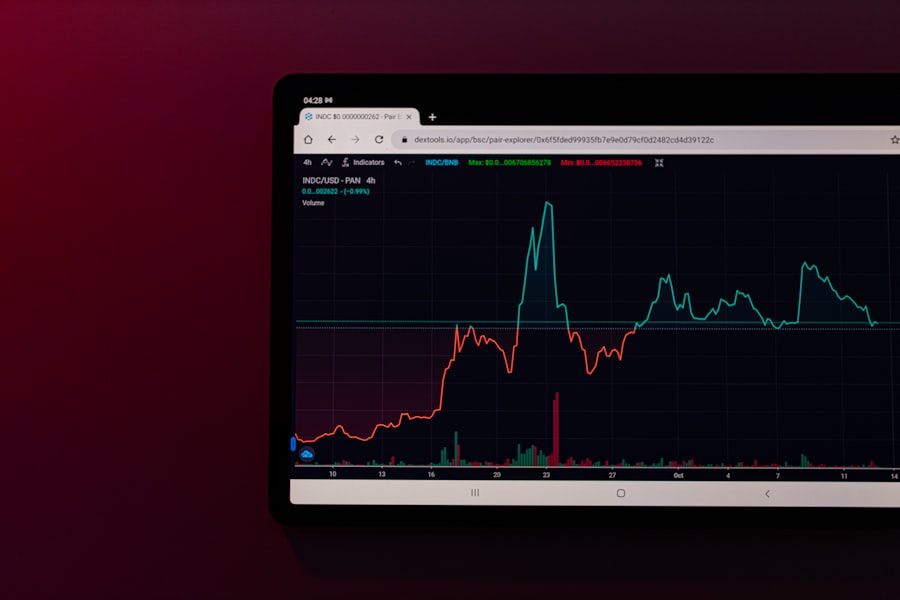
Several factors play a crucial role in influencing TSM stock price fluctuations. One of the most significant is the global demand for semiconductors, which is driven by technological advancements and consumer trends. As industries increasingly rely on chips for everything from smartphones to electric vehicles, any shifts in demand can have immediate repercussions on TSM’s stock price.
For example, the rise of artificial intelligence and machine learning applications has led to an uptick in demand for high-performance chips, directly benefiting TSMC. Another critical factor is geopolitical dynamics, particularly tensions between the United States and China. As a Taiwanese company operating in a region with complex political relationships, TSMC is susceptible to trade policies and tariffs that can impact its operations and profitability.
For instance, U.S. sanctions against Chinese tech companies have created both challenges and opportunities for TSMWhile restrictions may limit business with certain clients, they also position TSMC as a preferred supplier for companies seeking alternatives to Chinese manufacturers.
Technical Analysis of TSM Stock
Technical analysis of TSM stock involves examining historical price movements and trading volumes to identify patterns that may indicate future performance. Traders often utilize various tools such as moving averages, relative strength index (RSI), and Bollinger Bands to gauge market sentiment and potential entry or exit points. For instance, moving averages can help smooth out price fluctuations over time, providing insights into the stock’s overall trend direction.
In recent months, TSM’s stock has exhibited notable volatility, reflecting broader market conditions and investor sentiment towards technology stocks. Analyzing candlestick patterns can reveal potential reversal points or continuation patterns that traders may capitalize on. For example, if TSM’s stock consistently bounces off a particular support level while facing resistance at a higher price point, it may indicate a consolidation phase before a breakout or breakdown occurs.
Understanding these technical indicators can empower investors to make informed decisions based on market behavior rather than solely relying on fundamental analysis.
Fundamental Analysis of TSM Stock
| Date | Opening Price | Closing Price | High | Low | Volume |
|---|---|---|---|---|---|
| 2024-06-20 | 95.50 | 97.20 | 98.00 | 94.80 | 12,500,000 |
| 2024-06-19 | 94.00 | 95.30 | 96.10 | 93.50 | 10,800,000 |
| 2024-06-18 | 92.80 | 94.00 | 94.50 | 92.00 | 11,200,000 |
| 2024-06-17 | 93.00 | 92.50 | 93.50 | 91.80 | 9,900,000 |
| 2024-06-16 | 91.50 | 92.80 | 93.00 | 91.00 | 10,500,000 |
Fundamental analysis of TSM stock involves evaluating the company’s financial health and performance metrics to determine its intrinsic value. Key indicators include revenue growth, profit margins, earnings per share (EPS), and return on equity (ROE). TSMC has consistently reported impressive financial results, with revenue growth driven by increasing demand for advanced semiconductor technologies.
In recent quarterly reports, TSMC has demonstrated strong year-over-year revenue increases, reflecting its ability to capitalize on market trends. Moreover, examining TSMC’s profit margins provides insights into its operational efficiency. The company has maintained healthy gross and net profit margins compared to industry peers, indicating effective cost management and pricing strategies.
Additionally, TSMC’s commitment to research and development (R&D) is evident in its substantial investments aimed at advancing semiconductor manufacturing processes. This focus on innovation not only enhances its competitive edge but also positions the company favorably for future growth opportunities.
Market Sentiment and TSM Stock Price

Market sentiment plays a pivotal role in shaping TSM stock price movements. Investor perceptions can be influenced by various factors, including macroeconomic conditions, industry trends, and news related to key clients or competitors. For instance, positive developments such as new partnerships or contracts with major technology firms can bolster investor confidence and drive up stock prices.
Conversely, negative news—such as supply chain disruptions or regulatory challenges—can lead to sell-offs and decreased valuations. Social media platforms and financial news outlets have amplified the impact of market sentiment on stock prices. Retail investors increasingly rely on online forums and social media discussions to gauge sentiment around specific stocks like TSMThis phenomenon can lead to rapid price fluctuations based on collective investor behavior rather than fundamental factors alone.
Understanding how market sentiment interacts with TSM’s underlying fundamentals is crucial for investors seeking to navigate potential volatility.
Comparing TSM Stock Price Trends with Industry Peers
To gain a comprehensive understanding of TSM stock performance, it is essential to compare its price trends with those of industry peers such as Samsung Electronics, Intel Corporation, and GlobalFoundries. Each of these companies operates within the semiconductor space but may have different business models and market focuses. For instance, while Samsung is known for its memory chips and consumer electronics, Intel primarily focuses on microprocessors for personal computers.
When analyzing price trends over time, it becomes evident that TSMC has outperformed many of its peers in terms of stock appreciation and market capitalization growth. This can be attributed to its strategic focus on advanced manufacturing processes and its ability to secure long-term contracts with leading technology firms. In contrast, companies like Intel have faced challenges related to production delays and increased competition from foundries like TSMC.
Furthermore, examining valuation metrics such as price-to-earnings (P/E) ratios can provide insights into how investors perceive each company’s growth potential relative to its earnings capacity. While TSMC may command a premium valuation due to its market leadership position and growth prospects, other peers may trade at lower multiples due to varying levels of investor confidence or operational challenges.
Forecasting TSM Stock Price Trends
Forecasting TSM stock price trends involves analyzing both quantitative data and qualitative factors that could influence future performance. Analysts often employ various forecasting models that incorporate historical price data, earnings projections, and macroeconomic indicators to estimate future price movements. For instance, if analysts anticipate continued growth in semiconductor demand driven by emerging technologies like AI and 5G, they may project upward price trends for TSM stock.
Additionally, considering external factors such as geopolitical developments or changes in consumer behavior can enhance forecasting accuracy. For example, if tensions between the U.S. and China escalate further, it could impact supply chains or lead to shifts in customer preferences that affect TSMC’s business operations.
Conversely, positive developments such as government incentives for semiconductor manufacturing could bolster investor sentiment and drive stock prices higher. Ultimately, while forecasting is inherently uncertain due to the dynamic nature of markets and industries, a comprehensive analysis that combines technical indicators with fundamental insights can provide valuable guidance for investors looking to navigate the complexities surrounding TSM stock trends.

